The system produces a pair of modelocked femtosecond lasers (optical frequency combs) with a slightly different pulse repetition rate. In the time domain, the optical delay is rapidly swept through a range of 1 nanosecond at very high speeds. In the frequency domain, beat notes between each pair of optical comb lines are generated via heterodyne detection. Due to the gigahertz repetition rate, high power per comb line is obtained.
Through a novel shared-cavity architecture, our system is able to achieve ultra-low noise simply in free-running operation. In particular, the laser pair is passively stable with highly correlated intensity, timing, and phase noise properties between the two combs. Since there is only one laser cavity and no high-speed locking electronics or optical amplification, most of the complexity of conventional dual-comb and ASOPS systems is removed, while providing a small footprint and superior performance.
-
Features
1 GHz single-cavity dual-comb laser
- Two spatially separated pulse trains with >2 W per beam
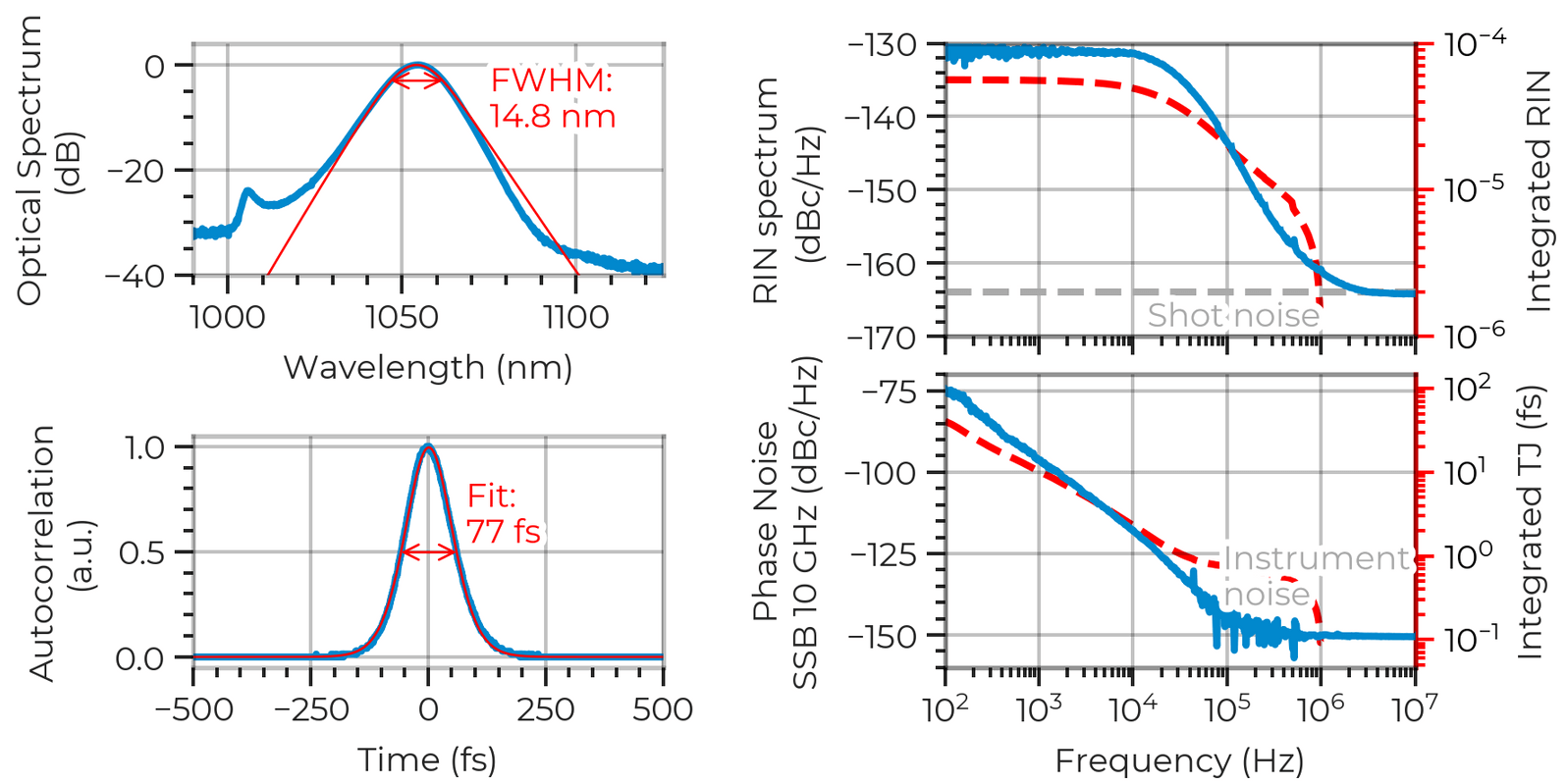
- <100 fs pulse duration
- Sub-cycle relative timing jitter
- Ultra-low relative intensity noise
- Fundamental Gaussian beam mode output
- Tunable and long-term stable repetition rate difference
- Compact system design
-
Technical specifications
Specifications
| Power per comb | >2.0 W |
| Pulse duration | <100 fs, clean sech2 pulses |
| Repetition rate | 1 GHz |
| Pulse energy | >2 nJ |
| Center wavelength | 1050±10 nm |
| Beam quality factor M2 | <1.1 |
| Beam ellipticity | <10 % |
| Individual comb RIN | <-160 dBc/Hz for frequencies >1 MHz |
Dual comb specifications
| Repetition rate difference | tunable between +/- 100 kHz |
| Relative timing noise | <10 fs [1 kHz, 100 kHz] |
SHG option
| Center wavelength | 525±5 nm |
| Power per comb | >100 mW |
Supercontinuum-generation option
| Fiber integration | Inquire for specific fibers |
Outputs
| Optical | Two spatially separated pulse trains |
| Cross-correlation signal | Trigger signal at the repetition rate difference |
| Digital signals | Δfrep/frep value with better than 10-6 precision |
Controls
| Repetition rate difference | Active Δfrep/frep stabilization at Δfrep rate up to 25 kHz, above free-running |
| Repetition rate | Fixed (digital or analog on request) |
| Power | Power allocation between fundamental and SHG (SHG option only) |
Dimensions
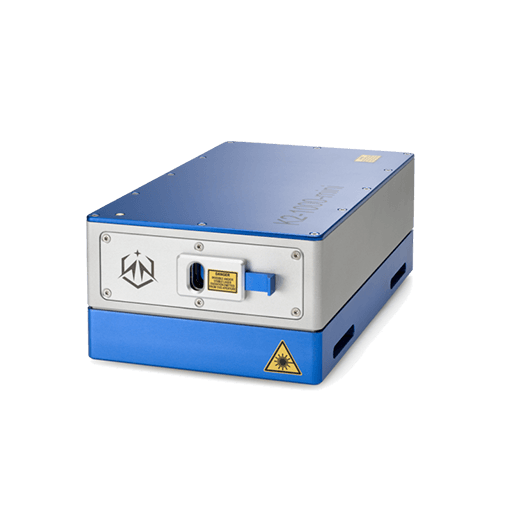
| Laser head (L x W x H) | 494 x 291 x 179 mm3 |
| Beam output height | 75 mm on (W) side |
| K2-Link Control Unit (L x W x H) | 395 x 436 x 88.05 mm3 (2U 19″ rack unit) |
| Cabling | 3 m between control box and laser head |
Requirements
| Operating temperature | 15 – 30 ºC |
| Relative humidity | <70% (non-condensing) |
| Electrical requirements | 100-120 VAC, 3 A, 50-60 Hz / 200-240 VAC, 1.5 A, 50-60 Hz |
| Power consumption | <150 W |
-
Options
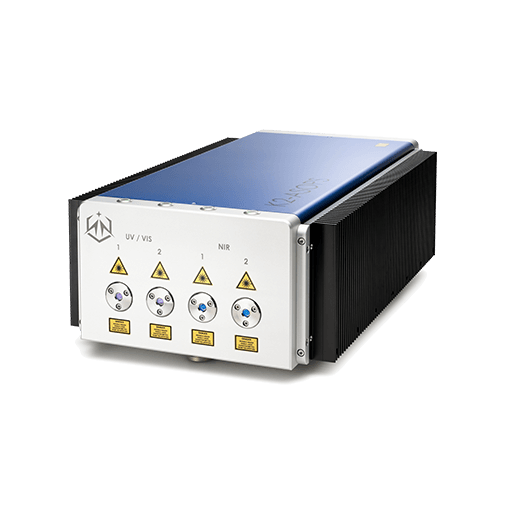
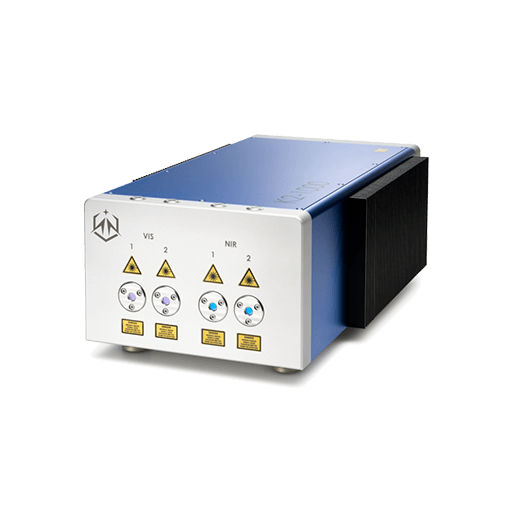
- Second harmonic generation
- Wavelength conversion via optical parametric oscillator
- Passive air or water cooling
- Low power and fiber coupled configurations
- Vibration and acoustic noise isolation
- Optical isolation
- Other repetition rates (please inquire)
-
Applications
- Pump-probe sampling
- Thick-film inspection
- Time-resolved spectroscopy
- Multi-species gas sensing
- Precision ranging
- THz-TDS
-
Example characterization